
"Watchmen" Review

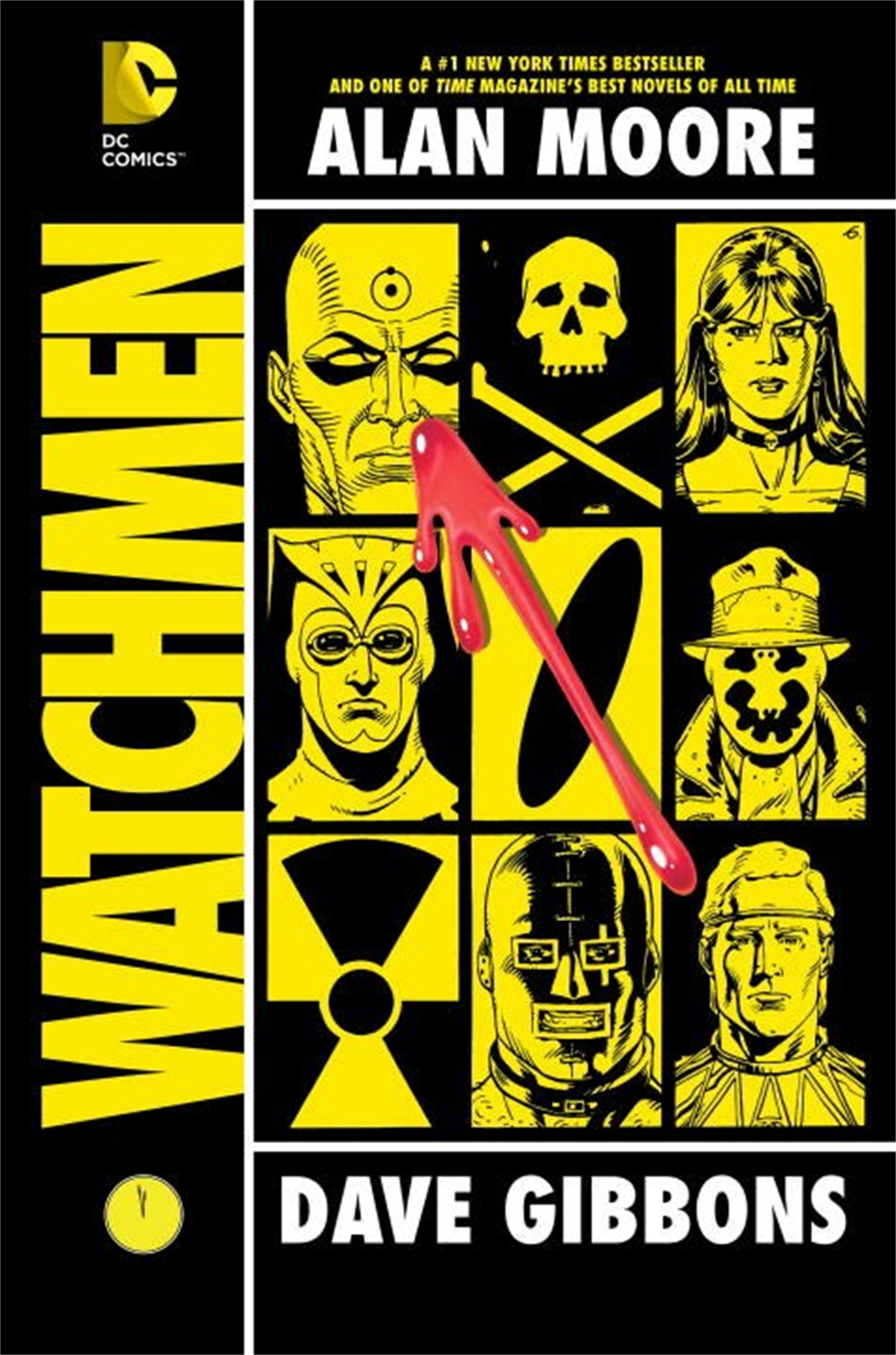
Well, well, well. If it isn’t time to review Watchmen, written by Alan Moore and illustrated by Dave Gibbons. As I’m writing this, I feel like it’s silly to review a graphic novel so highly regarded as this one. It’s not a new take that this is a great book containing incredible writing and beautiful artwork. But, since this is what I’m doing after I read comics now, this is my review.
First off, I just want to emphasize how much the artwork makes this book. Alan Moore is undoubtedly a great writer (even though he’s currently a wizard living in a cave somewhere), but I think the illustrations by Dave Gibbons and colors by John Higgins are what immediately draw the reader’s attention. I also think the way the 9-panel page layouts are done in this book are the best they’ve ever been done. I know Alan Moore has used the 9-panel method in other books like From Hell, and others have employed it since, like Tom King in Mister Miracle, but I think Dave Gibbons is the best at fully utilizing the 9-panels. It’s really incredible how much detail he’s able to include in each one and how well the compositions suit the panels

I think what also makes the use of the 9-panel layout so successful is the fact that it’s used throughout the entire book, and even the pages that don’t have nine panels factor in the layout. This can be seen in this splash page of Ozymandias fighting an assassin, which is also one of my favorite pages from the whole book.

It’s very creative and gives a great sense of consistency throughout the book, and as I was reading I was excited with each new page to see how Dave Gibbons would use the 9-panel layout.
Anyways, enough of 9-panel layouts. Just to talk about the writing a little bit, I think my favorite thing that Alan Moore does in this book is his use of metaphors. The main one is the use of Tales of the Black Freighter, a comic within the comic that tells the story of a sailor shipwrecked by pirates, who is attempting to get home to protect his town from those same pirates. When I first read Watchmen as a teenager, I didn’t understand why they kept jumping to this story because it seemed irrelevant. As I read it this time, not only did it make sense as a metaphor when compared to the story’s ending, but it feels so natural the way it’s placed throughout the book. There’s many times when dialogue in the main story and the Black Freighter story overlap because it could easily apply to both.
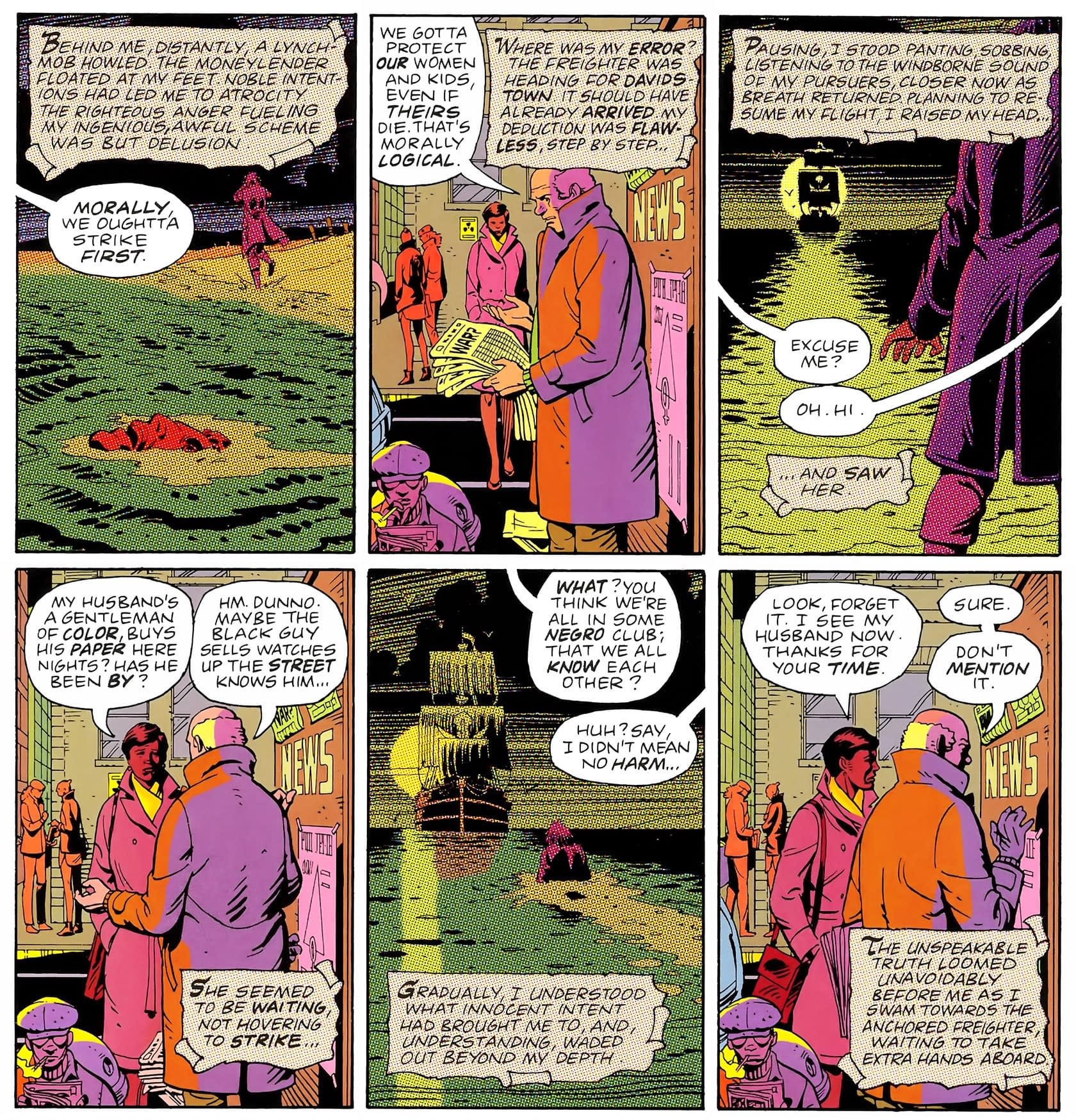
There’s other moments of Moore using metaphors in the book, such as when he’s simultaneously telling the stories of the separate characters, but the Black Freighter is probably the most prominent one. This technique gives a great flow to the story and makes these seemingly disconnected events feel connected. This is definitely something I’d like to see more of in comics; in other other people’s works as well as my own.
I also think that the biggest thing that makes the book, and it’s something that has been said many times before about Watchmen, is the characters. While they’re not all always likable (sometimes very unlikable), they’re incredibly interesting and feel so real. This is helped by the fact that Moore and Gibbons spend their time throughout the twelve issues providing detailed backstories for each character and giving them clear motives and issues. At the end of each issue there’s even supplemental materials like articles and letters to further flesh out the characters and world. I’ll be honest, whenever I saw one of these supplemental materials I wanted to skip over them every single time because it’s so much actual readingggg and I’m a busy mannnn……But I’m glad I powered through them, because they definitely helped in the reading experience.
I could go on and on about what’s good about Watchmen, but frankly I don’t think either of us wants that.
I’ll give it 9-panel page layouts out of 9.
I’m looking forward to the next time I read this, probably in another eight years!
Till next time!
-RD